
Why did UW remove its Middle East Center director?
On March 27, the University of Washington removed its Middle East Center (MEC) director, associate professor of Persian and Iranian Studies Aria Fani, only a few months into his three-year term.
The sudden decision came after Fani had sent several emails about the war on Iran to the MEC listserv, which he managed. The emails were dubbed “notes” and included analytical perspectives on the ongoing U.S.-Israeli war on Iran, including its geostrategic and regional implications.
Fani ran into trouble shortly after he sent the email “More Notes on Iran War” on March 18. According to the UW Daily, Fani received a call from UW Jackson School of International Studies (SIS) Director Daniel Hoffman a week later, informing him that he had misused his email list privileges to push his own personal views. Fani told the Seattle Times that Hoffman had said the emails made some members of the MEC community “feel attacked for their views.”
While Fani’s notes as a whole were mainly academic in nature, a few lines could be seen as inflammatory, such as a comparison he made between the ideology of Zionism and cancer. The Burner has reported the full contents of the email that led to Fani’s firing.
Fani’s emails had been picked up by notorious right-wing Zionist commentator Jason Rantz and his news outlet Seattle Red. The coverage sparked an influx of attention, social media harassment and doxxing directed at Fani.
In an interview with Real Change, Fani accused Hoffman and the university of failing to defend him from attacks by Zionists, which took a toll on his health. He also said UW had shown it did not protect academic freedom of faculty of color. Fani is an Iranian American.
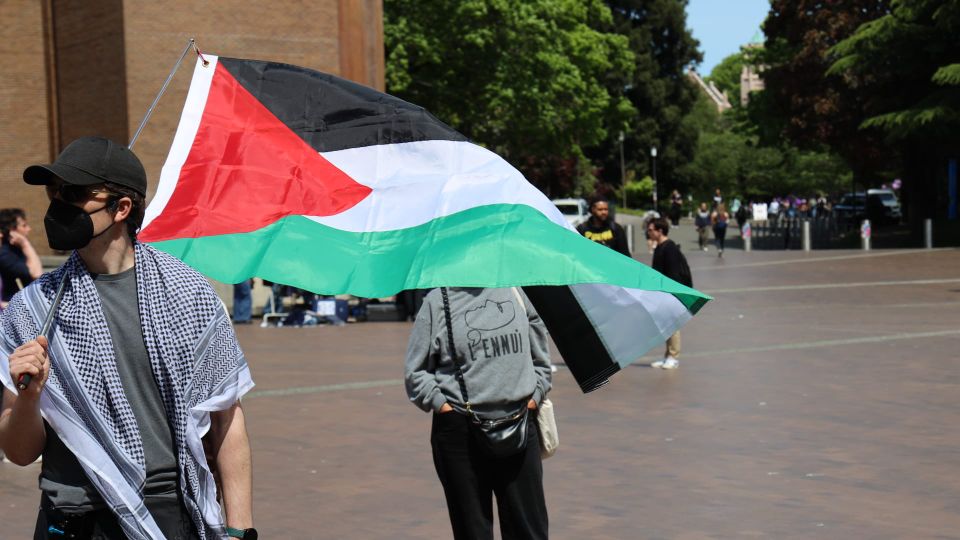
Since the start of Israel’s genocidal war on Gaza, students and faculty at UW have reported doxxing and harassment for supporting Palestine publicly. Pro-Palestine student protesters have been arrested both in Seattle and other university campuses across the country, especially during the 2024 encampment protests.
In an email to Gossip Guy, UW spokesperson Victor Balta said the removal had been made by the SIS alone and not any higher up administrators. Balta added that as a personnel matter, the university is “limited in our ability to say anything more.”
The firing sparked an uproar, with Fani’s supporters launching a public petition in protest of the decision. The UW chapter of the American Association of University Professors has also written to the university condemning Fani’s “unjust dismissal.”
In an April 30 letter to UW President Robert Jones, the Middle East Studies Association expressed its concerns about Fani’s removal, stating that the “action violates Professor Fani’s academic freedom and freedom of speech, but it may also be discriminatory on the basis of national origin and religion as well as the proximate cause of disability discrimination.”
The university’s decision to fire Fani — apparently in response to backlash to his criticisms of Israel and Zionism — only adds to ongoing perceptions that U.S. academic institutions are a hostile space for those who criticize American foreign policy.
Yet the community’s strong push back to Fani’s removal also reveals that the academy may be a site of contradiction and struggle, where oppressed voices can make their mark too.
Member discussion