
Seattle activist Kai Sorem killed by Philippine military
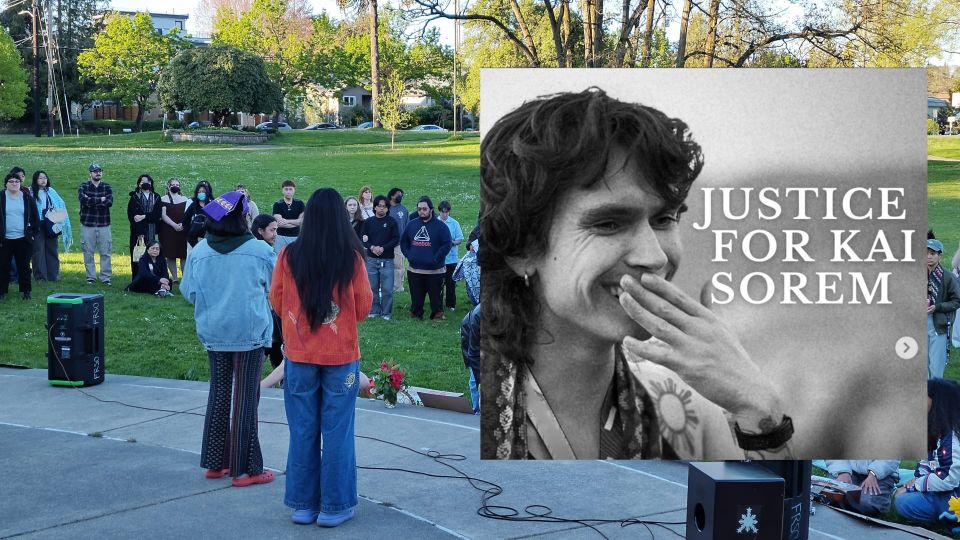
Community members held a vigil on Saturday night to mourn the killing of 26-year-old Seattle activist Kai Sorem by the Armed Forces of the Philippines (AFP). Sorem was a longtime Filipina American youth organizer in South Seattle and her shocking death sparked cries for justice and accountability.
Participants denounced the deadly April 19 attacks by the AFP as a “massacre of civilians” which left Sorem and 18 other people dead in the Toboso region of the island of Negros, Philippines. Others killed included 40-year-old Filipino American Lyle Prijoles, journalist RJ Ledesma and student leader Alyssa Alano.
According to an Instagram post by Anakbayan South Seattle, an organization Sorem had helped co-found, she decided to move to the Philippines to immerse herself within rural communities, improve her knowledge of the Filipino language and support the peasant struggle.
Around 150 people attended the vigil in Othello Playground. Many shared how they were personally touched by Sorem and her organizing within Filipino migrant communities.
Marie, a member of Bayan Washington, said Sorem had gone to Negros to work in solidarity with sugar cane farmers in their fight for dignity and fairness.
“Kai decided to go to the Philippines and go to these different people that are facing the worst kind of exploitation and oppression and really serve the masses there, be integrated with the community and actually help the people — in a way that the government has never given them that kind of help ever,” Marie said. “Kai saw the need to go home and to help our kababayan [compatriots] back home. It is not wrong for Filipinos to go home.”
A gentle, caring youth organizer
Kai Sorem grew up in Steilacoom, Washington and later lived in Tacoma and South Seattle. Vigil attendees painted a picture of her as a dedicated activist who cared deeply for her people and especially young people. She attended Central Washington University where she studied to be a music instructor. During her time in college, Sorem was politicized by the 2020 George Floyd protests and drew many parallels between state violence in the U.S. and the Philippines.
She brought her passion for music to her activism, participating in cultural performances at events and protests. After 2020, Sorem quickly immersed herself in activism, helping organize a Filipino neighborhood organization in Rainier Valley and serving as an advisor to the Filipino Club at Rainier Beach High School.
Some of the Rainier Beach High School students spoke at the vigil, describing Sorem’s mentorship and kindness show showed to them. They read a statement honoring her legacy.
“Today we honor our dear advisor, friend and ate, Kai Sorem,” the statement read. “Words cannot describe how much you've impacted our club. Ate Kai, thank you for the advice, small talks and the fun memories we’ve all shared with you, your name will not go in vain and we truly hope you and the other victims get justice. Your smile and loss were always the brightest and uplifted many.”
As the first solidarity officer of Anakbayan South Seattle — a group that advocates in support of the national democratic movement of the Philippines — Sorem frequently attended mobilizations and actions in support of progressive and liberation movements.
Liz, a member of the International League of Peoples’ Struggle, said that Sorem would frequently attend international leftist summits with fellow Seattle activists, forging collaboration between different communities.
“I remember Kai on these trips: [She was] so young, so bright, never shy, always going up to people introducing herself, wanting to learn from others,” Liz said. “Because she knew in her work here in South Seattle wasn’t enough, that we also had to connect our struggle that we are facing on a day to day here — whether it’s migrant detention, ICE raids, the exploitation of workers here in the U.S. — we had to connect those to the struggles back in our homelands.”
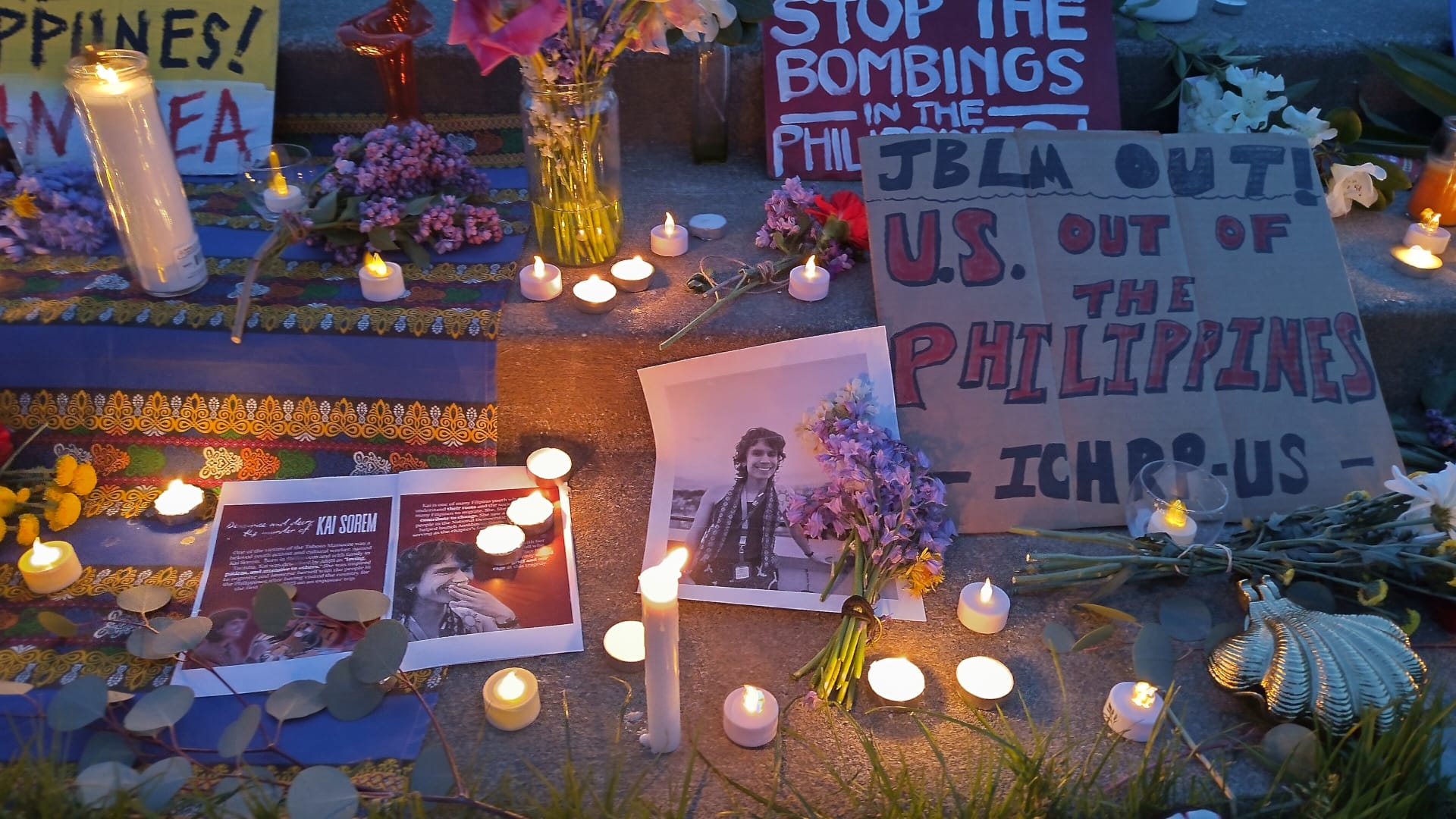
“Fighting for your rights is not terrorism”
The AFP has waged a decades-long counterinsurgency war against the National People’s Army (NPA), the armed wing of the Communist Party of the Philippines. After former President Rodrigo Duterte ended peace talks in 2019, fighting escalated between the two sides, with Negros island facing a substantial portion of the military violence.
The Philippine government claimed that all 19 people killed were NPA fighters, characterized the Toboso attacks as “clashes” and said one AFP soldier was wounded. However, the human rights group Karapatan disputed the military’s claims, saying the high number of causalities suggested potential violations of international humanitarian law. Activists have accused the AFP of employing widespread “strafing” attacks over a 12-hour period against the rural region, displacing more than 650 people.
In an April 23 statement, NPA spokesperson Ka Maoche Legislador said only a small squad of its soldiers were killed in the attacks, with the majority targeted being civilians.
“The rest were civilians documenting the activities of peasants, in solidarity with farmers who face relentless harassment from land grabbing and systemic neglect,” Legislador said in the statement.
Vigil speakers questioned the Philippine government’s official narrative, saying that innocent civilians and activists were illegally killed by the military.
“They say that fighting for your rights is terrorism,” Marie said. “How is that terrorism to fight for your rights?”
“Kai saw the need to go home and to help our kababayan back home. It is not wrong for Filipinos to go home.”
Demands for an independent investigation
An April 27 report by the independent Philippine news outlet Bulatlat reported that at least nine of those killed by the AFP in Toboso were civilians, including local residents and two children under the age of 18. Human rights groups and progressive Philippine lawmakers have called for an independent investigation into the killings.
Vigil attendees echoed those demands, saying that both the Philippine and U.S. governments shared complicity in the killings of Sorem and other civilians. They criticized the Philippines Enhanced Resilience Act passed in December 2025 which authorized up to $2.5 billion in military aid to the AFP over the next five years.
“I want us to ask ourselves: Why does our government continue to support and send funds to a government that again and again commits these kinds of atrocities, these international humanitarian law violations, these war crimes?,” said a member of Philippine-U.S. Solidarity Organization Tacoma who did not share their name.
The Toboso killings coincided with the high-profile Balikatan war games in the Philippines. Bayan and other supporters of the Philippine national democratic movement strongly condemned the exercises, saying they amplified the AFP’s militarization and human rights abuses while reinforcing the Philippines’ unequal relationship with the U.S.
Geneseo, a friend of Sorem’s and fellow activist, called on Seattleites to fight for justice for the 19 people killed in Toboso.
“I am absolutely heartbroken, but I want everyone here — [and] everyone who’s not here — to know that we will never stop fighting for you, Kai,” Geneseo said. “We will never stop fighting for Kai, for Lyle, for any of the Toboso 19 until we get justice, because that’s what she deserved.”
Member discussion